The Floorplan Intercept: Selling Commercial Office Furniture on New Leases
Commercial office furniture is a highly commoditized industry. If you wait until an expanding business issues an RFP or requests a catalog, you are already competing in a race to the bottom against generic online retailers like Ikea or Wayfair Business.
To secure massive, high-margin $50k+ contracts, you must execute The Floorplan Intercept. By intercepting the business the exact week they sign their commercial lease—months before they actually move—you bypass the competition and position yourself as a strategic workspace designer, not just a desk vendor.
1. The Space Utilization Open
When cold calling a decision-maker who just signed a new lease, do not ask if they need furniture. They will automatically say "We haven't thought about that yet" or "We're bringing our old stuff."
Instead, use a pattern interrupt that focuses on space utilization and the reality of their new square footage:
"Hi [Name], I noticed your team just secured the new 8,000 sq ft footprint on 4th Street. Usually, when companies expand into a space that size, they realize their legacy cubicles don't fit the new modern layout, and they end up wasting 30% of their expensive new square footage. Has your team run a 3D utilization scan to see how your current headcount will actually fit into the new floorplan?"

Your only goal is to expose the risk of "dead space" and secure a free 15-minute 3D modeling consultation.
2. The 3D Rendering Site Walk
Because they just signed the lease, the physical space is likely empty or under construction. This is your massive advantage. Offer to do a site walk to generate a free "3D Workspace Flow Analysis."
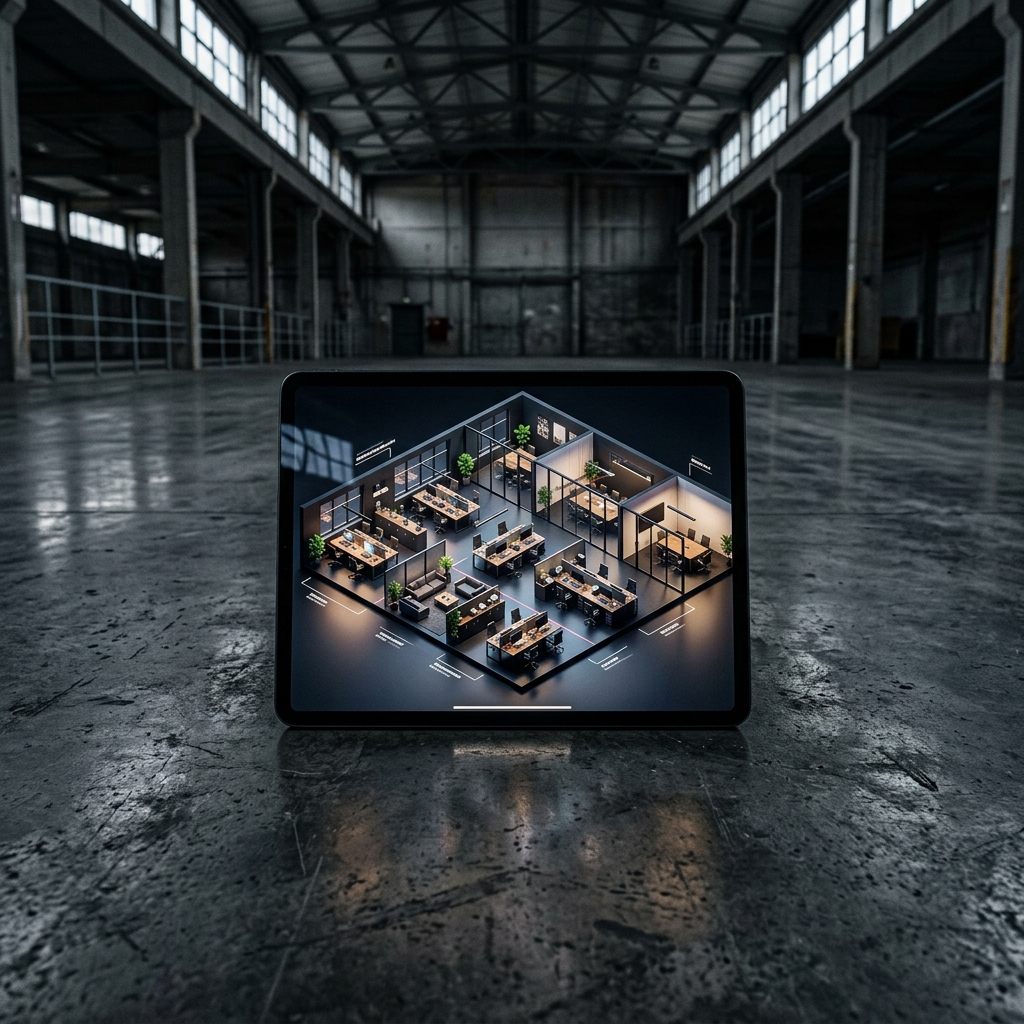
"Since you're paying a premium for this new footprint, let's make sure it's optimized. Give me 15 minutes in the empty space on Tuesday. I'll bring my tablet, run a LiDAR scan of the floor, and generate a 3D rendering showing exactly how to configure modular workstations to maximize natural light and team collaboration. There is zero obligation."
Once you provide them with a stunning 3D rendering of what their new office could look like, their old furniture will instantly feel obsolete. You shift the conversation from "buying desks" to "investing in company culture and employee retention."
3. The Supply Chain Anchor
Commercial furniture has notoriously long lead times (often 6 to 12 weeks for custom fabrics and modular setups). Use this logistical reality to anchor the deal early.
"Your move-in date is Q3, but commercial manufacturing lead times are currently at 8 weeks. To guarantee your team isn't working off folding tables on day one, we need to lock in the fabric and frame orders by Friday."
By executing the Floorplan Intercept, you secure the contract before the competition even knows the business is moving.
Commercial Office Furniture Tiers & Timelines
| Workspace Component | Typical Cost | Lead Time | Ideal Intercept Window |
|---|---|---|---|
| Executive Suites (Custom) | $5k - $15k+ | 8-12 Weeks | Month 1 of Lease Signing |
| Modular Workstations (Pods) | $1k - $3k / seat | 6-8 Weeks | Month 1-2 of Lease Signing |
| Ergonomic Seating (Bulk) | $400 - $1k / seat | 2-4 Weeks | Month 3 (Nearing Move-In) |
| Conference & Breakroom | $10k - $25k+ | 6-10 Weeks | Month 1-2 of Lease Signing |
Masterclass Video Sources
The tactical strategies in this playbook were synthesized from expert B2B sales masterclasses adapted for the commercial furniture industry:

Written by Brian Vasquez
Brian Vasquez is a Software Systems Architect and the Founder of LeadDeeds. Currently building with custom open-source agentic AI tools he authored, Brian engineers autonomous data pipelines powered by J.O.S.H.U.A.—a specialized A.I.M. OS agent that ingests raw public records to deliver early-stage commercial sales intelligence.
Beyond LeadDeeds, Brian builds public trust infrastructure (ayrianna.com) and operates a real-world commercial service business in Florida (tbsoftwash.com).